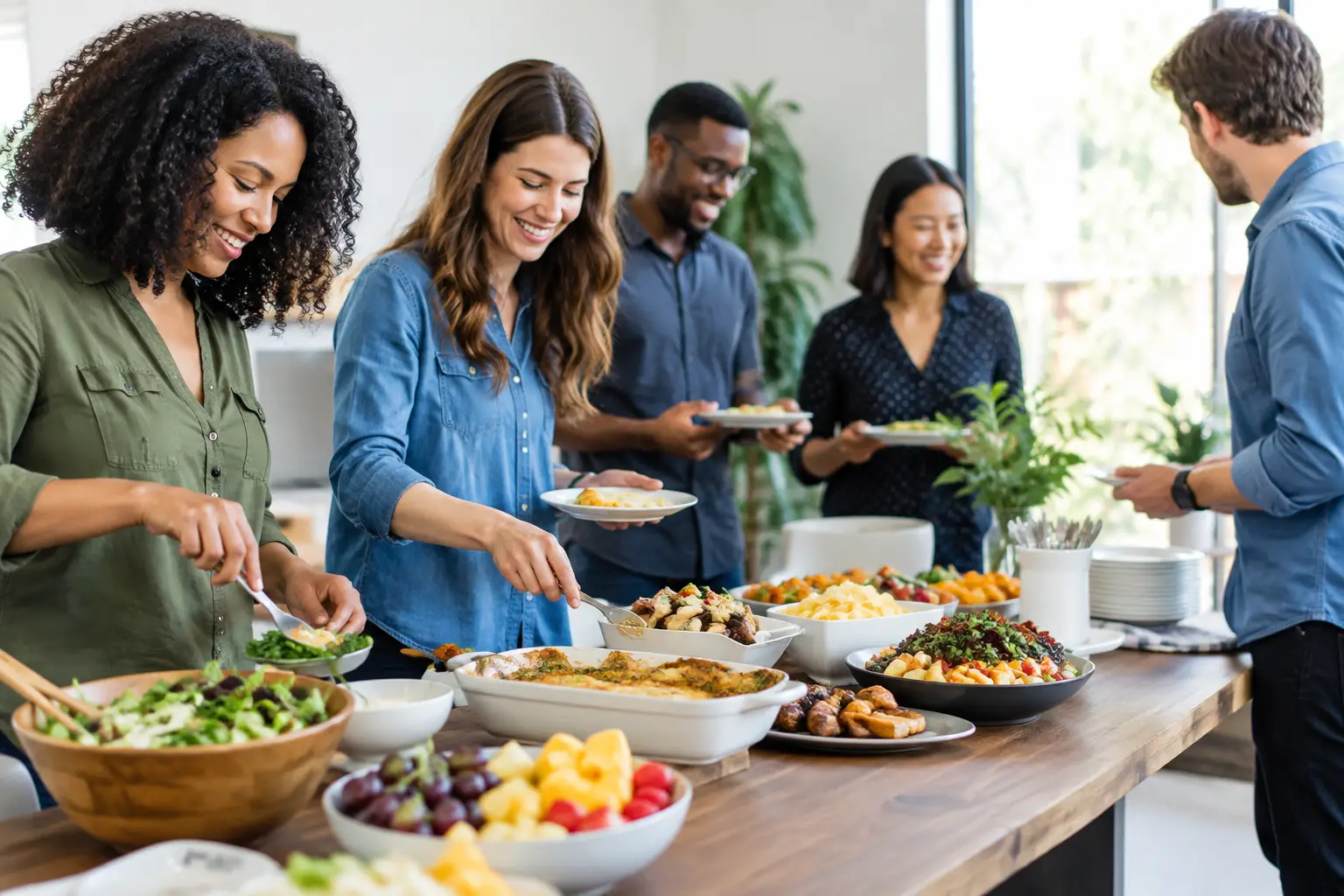
A great potluck should feel like a group dinner, not a group project. The secret to how to organize a potluck is not making every decision yourself. It is giving guests just enough direction to bring something delicious, show up relaxed, and help create a table that looks generous instead of wildly random.
Whether you are planning a backyard cookout, a game-day spread, a Friendsgiving feast, or an office lunch that needs more than three bags of chips, a little structure goes a long way. Here is how to make the whole thing easy, craveable, and actually fun.
Start With the Guest List and the Occasion
Before anyone claims a pasta salad, decide what kind of event you are hosting. A casual Sunday hang has different needs than a holiday meal, a kids’ birthday party, or a themed watch party. The occasion sets the menu, timing, dress code, and how much planning is worth doing.
Get a realistic headcount first. For an intimate potluck of eight to 12 people, you can be more relaxed and let everyone bring a favorite. Once you get closer to 20 guests, assignments become much more useful. Bigger groups create plenty of food, but they can also produce five desserts and no main dish if nobody is steering the menu.
Think about the space, too. If you have a small apartment, ask for foods that arrive ready to serve. A backyard party gives you more room for coolers, slow cookers, grilling, and a drink station. If the event is at an office or park, portable dishes and disposable serving supplies may be the smarter choice.
How to Organize a Potluck Menu That Makes Sense
The easiest approach is to organize contributions by category instead of asking every guest, “What are you bringing?” Give people a lane, then let them choose something they are excited to make or pick up.
For a standard lunch or dinner potluck, aim to cover mains, sides, salads or vegetable dishes, appetizers, desserts, drinks, and ice. Not every gathering needs every category. A Super Bowl party can lean heavily into dips, wings, pizza, and snacks. A brunch potluck might need egg dishes, baked goods, fruit, coffee, and bubbly rather than a formal entrée.
For groups of 10 to 15, a useful target is two to three substantial mains, four sides, one or two appetizers, two desserts, and a mix of nonalcoholic and alcoholic drinks if that fits the crowd. As host, you should claim one anchor item – perhaps the main dish, a big salad, or the dessert centerpiece – so the party still works if someone cancels at the last minute.
Be clear about portion expectations. A side dish that serves six is perfect for a small group, but it will disappear instantly at a 25-person party. Ask guests to bring enough for about half the guest count when everyone is contributing. That keeps the table varied without requiring each person to cater the whole event.
Use One Shared Sign-Up List
A group text can work for a small, close-knit gathering. For anything larger, use a shared sign-up list that everyone can see. Keep it simple: guest name, item, category, dietary notes, and whether they need fridge space or an outlet.
This is less about being controlling and more about preventing the classic potluck plot twist: four trays of brownies, no forks, and one lonely bag of baby carrots. A visible list also helps guests spot what is missing. Someone who planned to bring cookies may happily pivot to a veggie tray when they see dessert is covered.
Set a friendly deadline for sign-ups a few days before the event. Then send a quick check-in to anyone who has not chosen an item. People are busy, and a gentle reminder is better than a stressed-out scramble on the morning of the party.
Ask About Dietary Needs Early
Potlucks are more enjoyable when every guest can build a real plate instead of piecing together chips and fruit. Ask in the invitation whether anyone has allergies, follows a vegetarian or vegan diet, avoids gluten, or has other food needs.
You do not need to turn the menu into a complex spreadsheet. Just make sure there are a few clearly labeled choices that work for everyone. A hearty bean salad, veggie-packed pasta, hummus platter, roasted vegetables, or a dairy-free dessert can serve many guests at once.
For serious allergies, be direct. Ask contributors to label ingredients, avoid cross-contact where possible, and keep foods separate. If a guest has a severe allergy, it may make sense to coordinate their dish directly rather than relying on assumptions.
Make the Invitation Do More Work
Your invite should answer the questions guests will have before they ask them. Include the date, start time, address, parking notes if needed, the theme or vibe, what they should bring, and a link or direction to the sign-up list.
It also helps to give people a clear arrival window. If dinner starts at 6:30 p.m., ask guests to arrive around 6:00 p.m. with hot food ready to serve. That gives you time to arrange the spread without everyone standing around hungry while a casserole reheats.
If you are supplying plates, cups, napkins, utensils, and serving ware, say so. If guests should bring a serving spoon or tongs with their dish, mention that too. These tiny details save the host from digging through kitchen drawers while a bubbling queso dip has no way to leave its slow cooker.
Build a Setup That Keeps Food Moving
The best potluck tables are easy to navigate. Put plates, napkins, and utensils at the beginning of the line. Follow with mains, sides, and salads, then place desserts and drinks at a separate station if you can. That keeps guests from creating a traffic jam around the same counter.
Keep hot foods hot and cold foods cold. Slow cookers, warming trays, insulated carriers, and covered chafing dishes are helpful for bigger gatherings, but you do not need restaurant equipment for a casual party. Rotate hot dishes onto the table as needed, and leave cold items in the fridge or cooler until closer to serving time.
Labels are a small touch with a big payoff. A folded card that says “spicy buffalo chicken dip,” “vegan chili,” or “contains nuts” makes the spread feel thoughtful and cuts down on repeat questions. It also gives the person who brought the dish a little menu-board moment.
Have a landing zone near the door for incoming food. Clear a counter or table where guests can set down dishes, plug in a slow cooker, or add a label before heading into the party. You will look remarkably prepared, even if you were still wiping down the bathroom 10 minutes earlier.
Do Not Forget the Unflashy Essentials
The most memorable dishes get plenty of attention. The practical items are what keep the event comfortable. Make sure you have enough ice, trash bags, paper towels, food storage containers, hand soap, and take-home containers for leftovers.
You will also want extra serving utensils. Guests often remember the dish and forget the spoon, especially when they are transporting food across town. A stack of disposable containers or reusable deli tubs can also prevent the end-of-night ritual of trying to match random lids to random dishes.
If drinks are part of the plan, offer more than one nonalcoholic option. Sparkling water, lemonade, iced tea, and a fun seasonal punch make the spread feel festive for everyone. For alcohol, it is usually easiest to ask guests to bring what they like to drink, while you provide ice, cups, and a reliable water station.
Let Guests Help, but Keep the Vibe Easy
A potluck is shared hosting by design. If someone asks what they can do, give them a real task: refill ice, set out desserts, take leftovers home, or help pack up. Most people are happy to pitch in when the request is specific.
Still, do not overmanage every detail. The charm of a potluck is the surprise factor – the neighbor who arrives with a family-recipe mac and cheese, the friend who brings a new viral dessert, the person who turns a grocery-store rotisserie chicken into a very smart shortcut. A little variety is the point.
When the night winds down, send guests home with leftovers rather than trying to store a refrigerator’s worth of food. It cuts cleanup, reduces waste, and lets everyone relive their favorite bite the next day. Save one plate for yourself, though. After all that organizing, you deserve the best leftovers in the house.

Leave a Reply