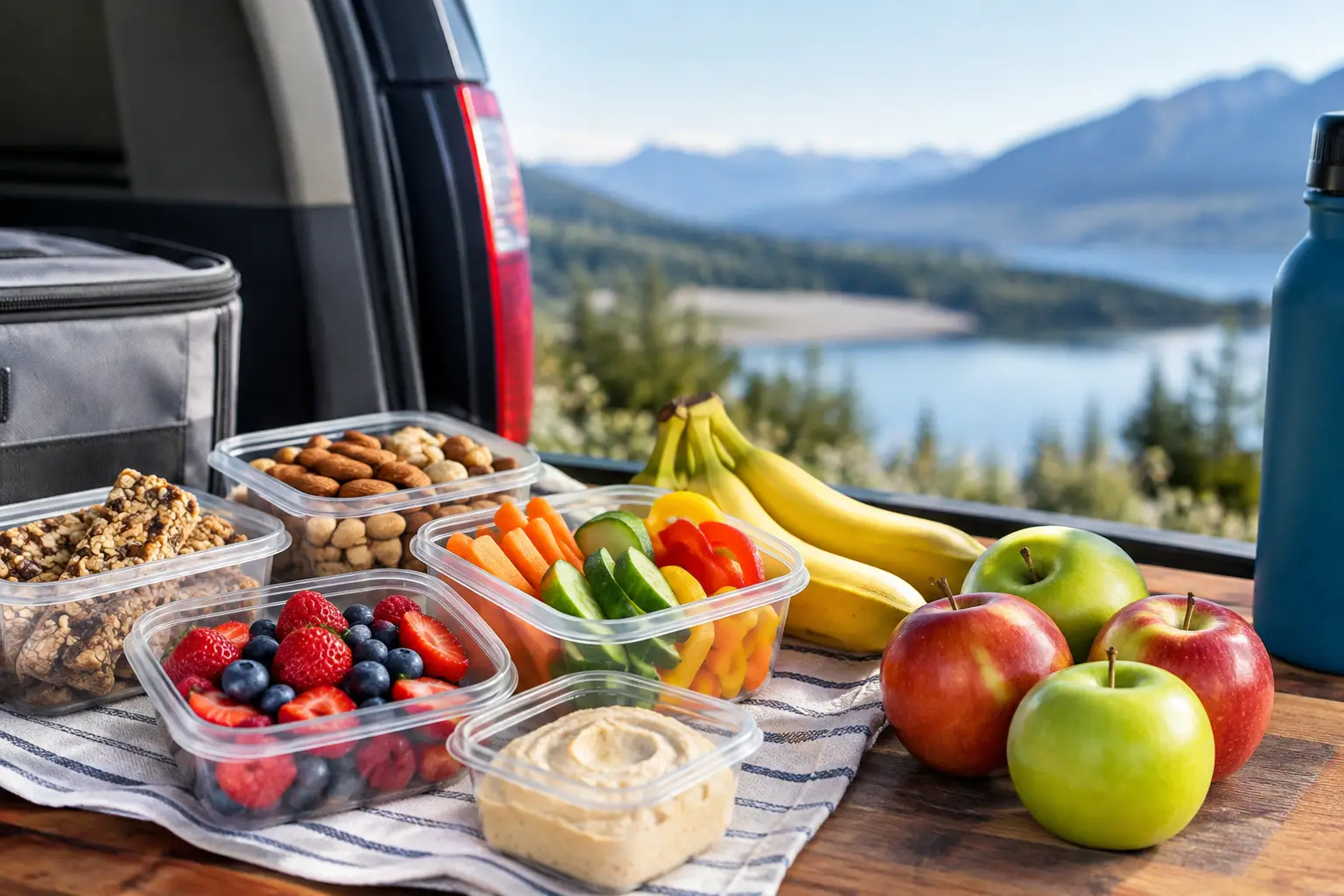
The best road trip snack spread starts working before the car leaves the driveway. When you pack road trip snacks with a little strategy, you skip the melted chocolate, mystery crumbs, and pricey gas-station panic buys. In the end, you gain a much more delicious ride.
Whether the destination is a beach rental, a college visit, a national park, or Grandma’s house three states away, snacks set the mood. They can keep a sleepy driver alert, settle hungry kids before the next exit, and turn a routine fuel stop into something you actually look forward to. The trick is not packing everything in the pantry. It is building a lineup that is easy to grab, hard to spill, and genuinely craveable at mile 247.
Start With the Road Trip You’re Actually Taking
A cooler packed for a six-hour summer drive looks different from a snack bag for a quick fall foliage weekend. Before shopping, think about the number of passengers, the distance between planned stops, the weather, and whether you will have a hotel fridge or campsite cooler later.
For a family car ride, individual portions can save a lot of backseat negotiations. For two adults on a long drive, a few shareable options may feel less fussy and create less packaging waste. If someone has dietary restrictions, make their snacks easy to identify rather than tossing everything into one communal tote.
It also helps to plan around your departure time. A morning start calls for breakfast-adjacent picks like banana bread, egg bites, yogurt, or a cold brew. An afternoon departure may need salty, crunchy snacks and something sweet for the inevitable energy dip. The point is to pack for real hunger, not just the fantasy version of yourself who will happily eat plain almonds for eight hours.
How to Pack Road Trip Snacks by Zone
The easiest setup uses three simple zones: a front-seat snack caddy, a cooler, and a backup stash. This keeps the food you need now separate from the food you want later.
Keep the front-seat caddy clean and grab-friendly
This is the high-traffic zone. Put snacks here that can be opened with one hand at a stoplight or handed backward without creating an instant cleanup situation. Think pretzel thins, popcorn, dried fruit, protein bars, trail mix, crackers, fruit snacks, and single-serve nut butter packs.
Choose items that do not require utensils, refrigeration, or a complicated explanation. A bag of powdered cheese puffs may taste great, but it will also announce itself on every black car seat. Save the messier favorites for a picnic stop.
A small plastic bin with handles works well because it stays upright on the floor or center console. Use zip-top bags for open packages, especially if you are bringing chips or cookies. The goal is to avoid hearing a bag slowly empty itself onto the floor during a sharp turn.
Make the cooler your fresh-food MVP
A cooler gives the trip a major upgrade, especially in warm weather. It is where you can stash cold grapes, cheese sticks, hummus cups, turkey roll-ups, apple slices, baby carrots, sparkling water, cold brew cans, and a few fun beverages for passengers.
Freeze a couple of water bottles the night before instead of buying extra ice packs. They help keep food chilled, then become cold drinking water as they thaw. Just leave a little space at the top of each bottle before freezing so it does not crack.
Keep the most perishable food closest to the ice packs and avoid opening the cooler every 10 minutes. If you are carrying deli meat, dairy-heavy dips, or cut fruit on a hot day, eat those earlier in the drive. A cooler helps, but it is not magic after hours in a sun-baked vehicle.
Save a backup stash for snack emergencies
The backup stash is for the delayed dinner reservation, the closed roadside diner, or the kid who suddenly says they are starving five minutes after lunch. Keep shelf-stable options in a separate bag in the trunk or under a seat.
Good backup choices include peanut butter crackers, jerky, shelf-stable milk boxes, granola bars, tuna snack kits, instant oatmeal cups if you know you will have hot water, and a small treat you are not planning to open right away. That last one matters. A surprise pack of gummy candy or favorite chocolate can rescue a very long stretch of traffic.
Build a Snack Mix That Does More Than Taste Good
A great car snack lineup has variety. Too many sweets can leave everyone feeling sluggish. Too many salty snacks can have the whole car reaching for water. Aim for a mix of protein, produce, crunch, and a little fun.
For protein, bring cheese, jerky, roasted chickpeas, yogurt drinks, hard-boiled eggs, or nut-based snack packs if they work for your group. For produce, choose sturdy fruit like apples, clementines, grapes, blueberries, and bananas. Fresh fruit feels especially good after a stretch of pretzels and fast-food fries.
Crunch is nonnegotiable for most road trips. Popcorn, pretzels, crackers, snap pea crisps, and roasted nuts all travel well. Then add one or two playful picks: spicy chips, mini cookies, sour candy, chocolate-covered almonds, or the limited-edition snack flavor everyone has been talking about. Road trips are not a wellness retreat. A little novelty belongs in the bag.
If kids are coming along, try a snack box moment instead of passing around full-size bags. Fill small containers with a few crackers, fruit, cheese, and something sweet. It feels special, slows down grazing, and gives everyone their own portion without turning the backseat into a snack aisle.
Skip the Snacks That Make the Car Feel Gross
Some favorites are better left at home, at least until the hotel. Anything highly meltable, extra greasy, intensely fragrant, or crumb-prone comes with a trade-off.
Chocolate bars can become a sticky disaster in a warm car. Powdered snacks leave fingerprints on every screen and door handle. Tuna packets and hard-boiled eggs may be convenient, but their smell can overstay its welcome in a closed vehicle. And soda is fun, but too much carbonation can make passengers uncomfortable when they are sitting for hours.
That does not mean these foods are banned. It depends on the trip and your tolerance for mess. If you are heading to a cabin with plenty of cleaning supplies, bring the chips. If you are in a packed car with a toddler, a dog, and light-colored upholstery, choose the less chaotic option.
Don’t Forget Drinks and Cleanup Supplies
Drinks deserve the same planning as snacks. Water is the baseline, but a mix of still water, sparkling water, electrolyte drinks, iced tea, or canned coffee can make the ride feel less repetitive. For drivers, be realistic about caffeine. One coffee can be helpful; three giant coffees may just create too many urgent rest stops.
Bring more napkins than you think you need, plus hand wipes, a small trash bag, and a few resealable bags for leftovers. A roll of paper towels can feel excessive until someone drops a yogurt drink between the seats. Then it feels like genius.
A compact cooler bag, a snack tote, and a trash system are enough for most trips. You do not need a color-coded command center. You just need food that is easy to find and a place for the wrappers to go.
Make One Pit Stop Part of the Fun
Packing snacks does not mean swearing off roadside treats. In fact, leaving room for one spontaneous stop is part of the appeal. Maybe it is a regional chip flavor, a gas-station bakery cookie, a drive-thru iced coffee, or a local fruit stand with peaches that smell like summer.
Set out with enough food to avoid desperation, then let the route offer one delicious surprise. That balance keeps the trip affordable while still making it feel like an experience, not just a drive.
Before you pull out, put the first round of snacks within reach, tuck the cold items deep in the cooler, and save one unexpected favorite for later. Somewhere between the playlist, the scenery, and that perfectly timed bag of popcorn, the drive may become one of the best parts of the trip.



Leave a Reply