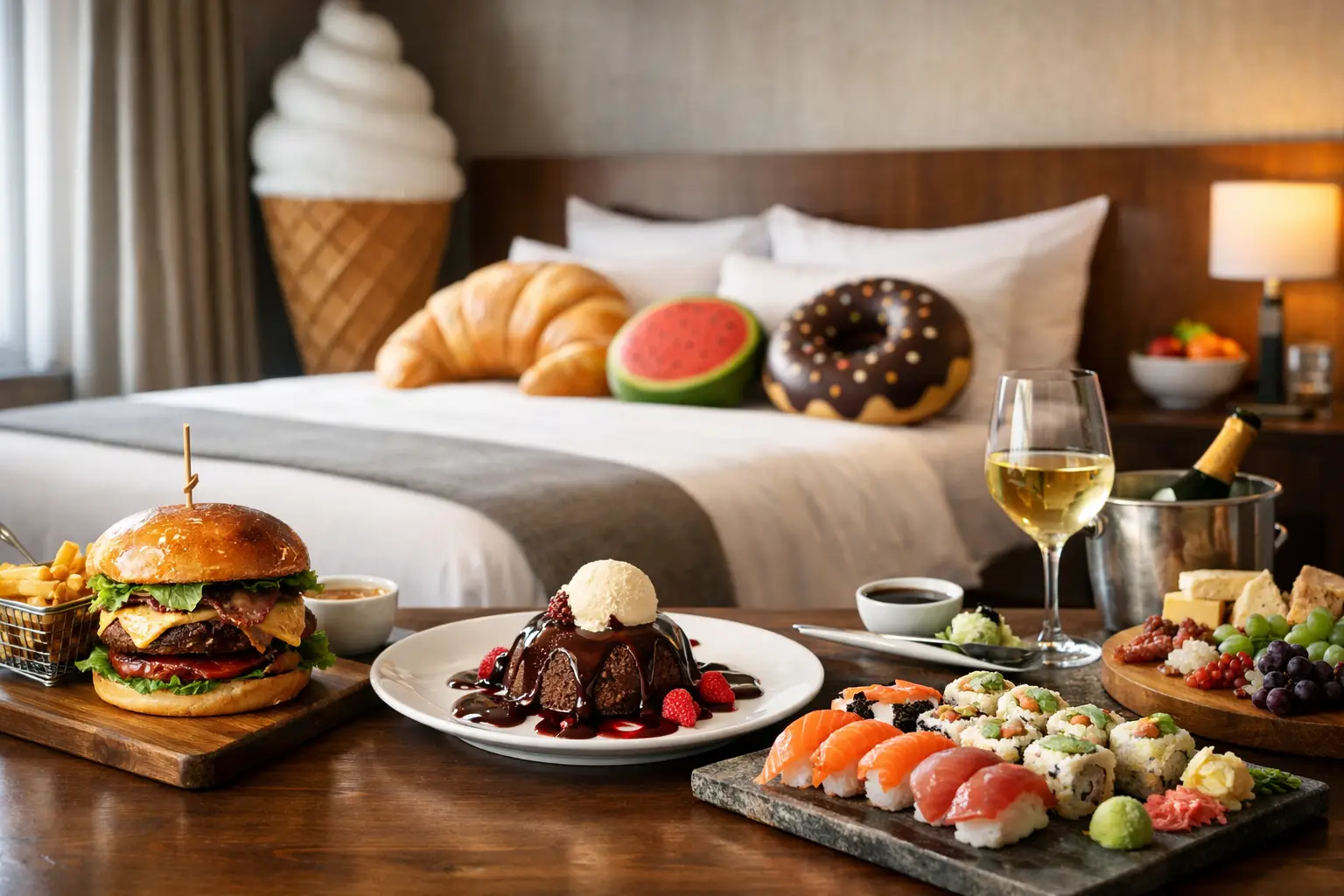
A minibar stocked with local snacks is nice. But, a hotel with a celebrity chef restaurant or bar with a secret cocktail menu sparks interest. That is a trip with flavor. This guide to food themed hotel stays is for travelers who want their next getaway to feel more delicious than a standard room weekend.
Food-forward hotels are having a major moment. From destination properties built around renowned chefs to playful stays inspired by candy, wine, coffee, and regional specialties, food flavors every night. The best ones do more than offer a pretty restaurant on-site. They turn eating and drinking into the reason you booked in the first place.
What Counts as a Food Themed Hotel Stay?
A food themed hotel stay can be as polished as a vineyard resort with a chef’s tasting menu or an over-the-top as a dessert-inspired suite. What matters is that food is woven into the experience, not simply listed under amenities.
At one end are culinary destinations. For example, there are hotels with cooking schools, working farms, chef residencies, wine cellars, and seasonal menus built around the region. Others are pop-culture-friendly stays that lean into a single craving. It can be a trending chocolate experience, themed-afternoon tea, over the top pizza, or a beverage-centric bathroom.
There is also a middle ground. Plenty of city hotels are becoming mini food hubs. It is easy to pair great rooms with buzzy restaurants, rooftop bars, coffee counters, and neighborhood markets. For a quick two-night escape, that setup can be more fun and far less complicated than a full resort itinerary.
Choose the Flavor of Your Getaway First
The fastest way to narrow the options is to decide what you want food to do for the trip. Are you looking to learn something, celebrate something, relax with a glass of something, or simply eat exceptionally well without getting in a car every two hours?
For the hands-on foodie
Book a property with a cooking class, farm tour, foraging walk, or chef demonstration. These stays work especially well for couples, friend groups, and parents traveling with older kids who want a memorable activity. Look closely at the schedule before reserving. Some hotels offer classes daily, while others only run them on select weekends or during harvest season.
A culinary school hotel can be worth the splurge when the instruction is included or when it replaces several separate meals and activities. If the class costs extra and you are only interested in one dinner, a restaurant-focused city hotel may give you more value.
For wine, beer, and cocktail fans
Vineyard hotels, brewery stays, and spirit-forward properties make an easy case for a long weekend. The appeal is built into the stay. Tastings are nearby, the menus are designed to pair, and nobody has to volunteer as the designated driver after a long lunch.
Still, location is vital. A winery property can be wonderfully quiet, but that can also mean limited dining choices after the tasting room closes. If you want variety, choose a hotel near a walkable wine town. The best move is often a one-night vineyard stay followed by a night in town. It offers more variety.
For a sweet, playful celebration
Dessert-centric afternoon teas, chocolate packages, candy-colored rooms, and themed pop-ups are made for social media shares. These experiences tend to be limited-time, so confirm exactly what is included. A themed room alone may be cute, but a package with breakfast, treats, and a reserved experience can feel much more complete.
This category can be especially family-friendly, though adults should not assume every whimsical food theme is designed for kids. Some are styled for date nights, bachelorette groups, or grown-up nostalgia. Read the details instead of judging by the frosting-colored photos.
For local flavor without a packed schedule
If your ideal vacation involves sleeping in, lingering over coffee, and ordering one more small plate, focus on hotels tied to a distinct local food scene. Many areas have a regional food or signature dish. New York and bagels or New Orleans and Cajun food are just two examples.
Here, the hotel does not need a giant culinary program. A thoughtful breakfast, a useful concierge recommendation, and a location within walking distance of the diverse culinary scene is enough. This is often the smartest pick for busy travelers who want a food-filled escape without planning every hour.
How to Vet Food Themed Hotels Before You Book
The phrase “food experience” can mean anything from a welcome cookie to a full itinerary. Guests should get specific before committing. For example, start with the hotel restaurant. Is it open on the nights you will be there? Does it take reservations from outside guests? A celebrated dining room that is fully booked before you arrive can turn a dream stay into room service and regret.
Next, inspect what is actually included in the rate. Resort credits sound generous, but they may exclude alcohol, gratuity, peak-time bookings, or the restaurant you most want to try. Included breakfast can have a real value at a food-focused property, particularly if it is a plated meal or a market-style spread instead of another make your own waffle.
Seasonality matters, too. A farm dinner, harvest menu, or outdoor pizza night may only run for a few months. Traveling in the off-season can bring lower rates and a calmer experience, but it may also mean a scaled-back menu and fewer events. Neither choice is wrong. It depends on whether your priority is a deal or the full culinary calendar.
Finally, look beyond the property. If the hotel is remote, plan for most meals to happen there and price the trip accordingly. If it is urban, save room in your schedule for one or two nearby spots. The sweet spot is a hotel with enough on-site appeal that you can stay put if you want, plus a neighborhood that gives you options if you do not.
Build a Better Food Weekend, Not a Meal Marathon
It is easy to overbook a food trip. Suddenly there is brunch at 10, a tasting at noon, a class at 3, cocktails at 5, and a reservation at 7:30. That can be fun once, but it rarely leaves space to enjoy the hotel itself.
Choose one anchor experience per day: a chef’s dinner, a cooking class, a winery visit, or a market tour. Then let the rest of the day stay flexible. That breathing room is where the best trip moments happen – a long lobby coffee, a surprise happy hour, a slice from the place everyone keeps mentioning, or a nap before dinner that makes the whole evening better.
For groups, agree on the one reservation nobody wants to miss and leave the remaining meals loose. Food preferences, budgets, and energy levels can change quickly, especially after a day of travel. A hotel with a strong casual option is a quiet group-trip hero.
The Details That Make a Stay Feel Worth It
A food themed hotel does not have to be expensive to feel special. Sometimes it is a locally made snack in the room, a complimentary evening pour, or a breakfast sandwich that is genuinely better than it needs to be. The difference is intention.
Watch for small signals that the property takes its food seriously: menus that change with the season, local producers named on the menu, staff who can describe what is fresh, and dining spaces that feel inviting even when you are not eating. A hotel that treats breakfast as an afterthought probably will not transform your weekend just because it has a trendy restaurant name attached.
Also consider the non-food basics. A gorgeous chef’s table cannot fix thin walls, a long drive from everything, or a resort fee that blows up the budget. Read recent guest feedback for service, room comfort, and noise, then decide how much culinary excitement you are willing to trade for convenience.
The best food themed hotel stays give you a story to bring home, whether it is the pasta you learned to make, the pastry you still think about, or the perfectly timed late-night fries at the hotel bar. Book the experience that matches how you actually like to travel, then arrive hungry enough to let the weekend surprise you.


Leave a Reply